


Vegetarian Chinese Soul Food
Vegetarian Chinese Soul Food
Couldn't load pickup availability
Description
Description
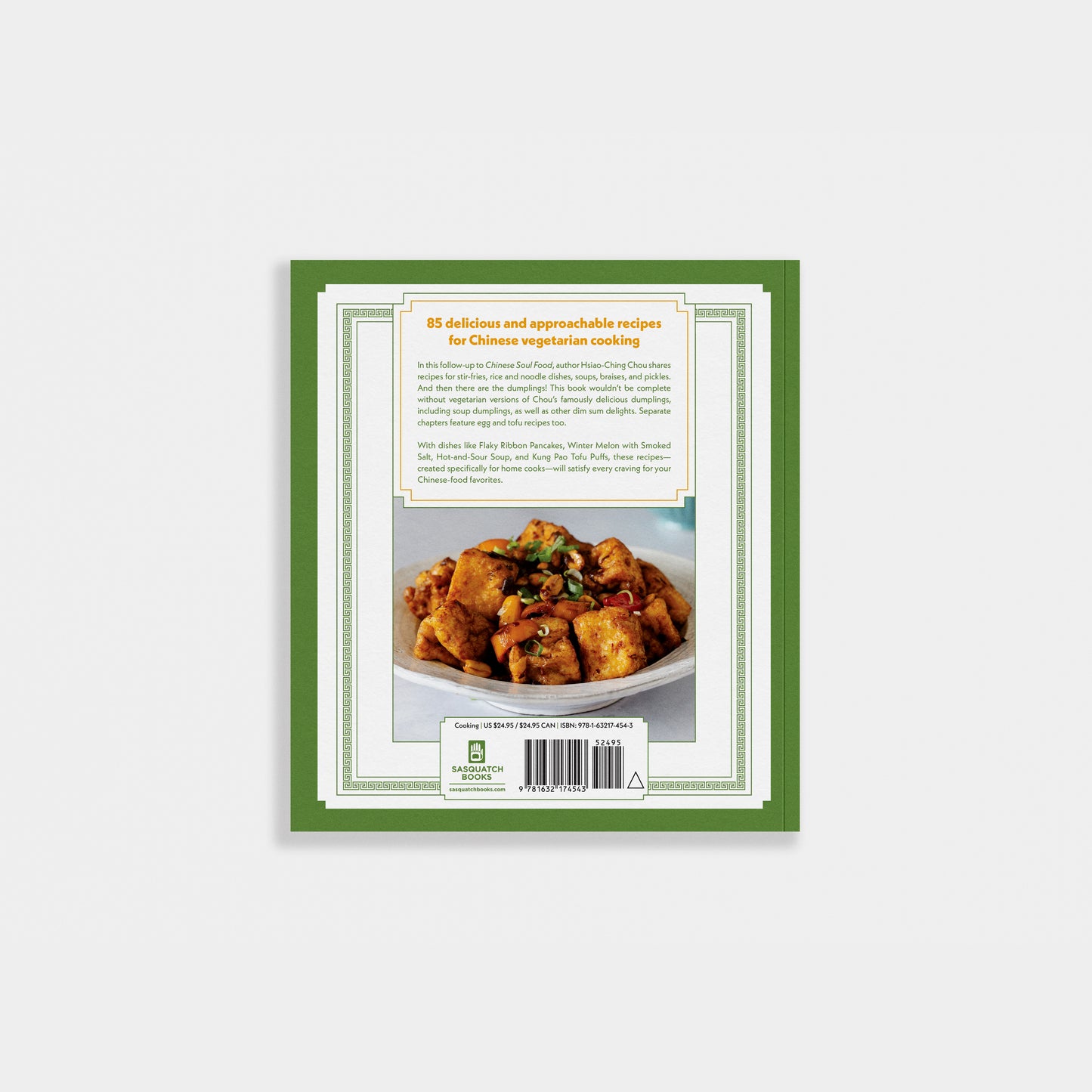
Chinese Soul Food drew cooks into the kitchen with the assurance they could make Chinese cuisine at home. Author Hsiao-Ching Chou’s friendly and accessible recipes work for everyone—including average home cooks.
In this new collection, you’ll find 75 vegetarian recipes divided into 9 chapters:
• Dumplings—Chou’s specialty!
• Dim Sum and Small Bites
• Soups and Braises
• Steamed Dishes
• Rice and Noodles such as
• Tofu
• Eggs
• Salads and Pickles
You’ll also find helpful information on essential equipment, core Chinese pantry ingredients (with acceptable substitutions), how to season and maintain a wok, and other practical tips.
Whether you’re a vegetarian or simply reducing the amount of meat in your daily diet, these foolproof Chinese comfort food recipes can be prepared any night of the week. As the author likes to say . . . any kitchen can be a Chinese kitchen!
About the Author
About the Author
Details
Details


I have been the prep cook for my husband's Chinese cooking for almost 30 years. Even with all of the instructions, other cookbooks, & even YouTube videos I still haven't felt confident about doing a Chinese dish completely alone. (Other than mabo tofu from a box which is about the equivalent difficulty of making hamburger helper.)I always get lost when recipes say "season to taste." I can bake just great because everything has measured amounts. I like that this cookbook does as well! It is written in English originally, not translated (poorly) from Chinese like my other Chinese cookbooks.I found the photos at the front of the book extremely helpful when shopping for ingredients at the Asian market! Several of the ingredients we purchased were new to us in their precooked form.I made the Ginger-Red Date Broth p. 110 and realized that I've never been able to replicate the restaurant flavor before because I didn't know about red dates. I also made the Mian Pian Soup p. 113 although I substituted tofu skins for the wonton wrappers.It also worked great in my Instant Pot & I didn't even need to get out my husband's wok! ;-)


Wonderfull recipes
We have tried a few fancier vegetarian Chinese cookbooks, but we come back to this one more because M-F makes up much more of the week. Ingredients are usually easily sourced and the recipes we use most are simple and tasty.
This book arrived in really great condition!And was well packed,There's some really wonderful recipesEven if you're not a vegetarian,I think this book is a great one to go to for some easy to prepare meatless meals
used as guide in home cooking.
Love this book so much! There's a lot of vegetarian takes on traditional recipes in here that I ate while growing up in a Chinese household. I read one review that complained the book didn't have a vegetarian twist on mapo tofu or kung pao chicken but if you look in the table of contents under the tofu section there are literally recipes for kung pao tofu puffs and meatless mapo tofu so I have no idea what they were complaining about.I love the inclusion of flakey scallion pancakes, you tiao, and basic dumpling dough. My recommendations definitely have to be the vegetable crystal dumplings and the soy milk soup with you tiao -- two childhood favorites of mine. I also love the ingredients explanations in the book because I grew up with many of these ingredients without knowing the actual names for them, so having a name to attach is great for me. The only thing is I wish there were Chinese translations for some of the pantry staples/sauces so that I knew what to look for on the labels when shopping. For those who aren't like me and have a Chinese parent to ask, I highly recommend looking at the woks of life blog for the Chinese translation of ingredients so that you don't get too overwhelmed in the supermarket :)
Got this book at the recommendation of Dr. William Li (Eat to Beat Disease). Have tried two recipes (I just got the book) and they were delicious. Looking forward to trying mor recipes.
This is the best vegetarian book out there. The recipes are so tasty. I hate vegetables but love the recipes in this book. Now I feel like why would I ever eat American food when Chinese Soul food is more tasty and more healthy. Win win.
Clearly written, adaptable recipes, great technique guides. I especially appreciate the ingredient guides and sourcing tips. Even though my mom live thousands of miles away and has a very different food palate we've been able to cook along to this book together! Her favorite is the chili-shallot jam, mine is the Sichuan pepper salt-fried tofu. Tasty, reliable meals for all people.
This is not 'fake meat' versions of restaurant favourites. This is a beautiful and expertly guided tour of authentic vegetarian foods. Someone comments that they're offended they list asparagus as pantry item and left a single star rating. (really?) - They also list, dried kelp, Jujubes (Chinese red dates), dried lily flowers, cloud ear fungus, etc... I'd take the two 1 star reviews with a grain of salt if you're reading this... As an avid collector of vegetarian cookbooks this is a welcome and delightful addition. The author Hasio-Ching Chou is thoughtful in their instructions and offers a beautiful collection of recipes. I think anyone who enjoys cooking will appreciate this book.
Fantastic book! Tried so many recipes and they are great! Contains very useful information regarding basic products, methods. Thank you!!!
Wonderfully written, fabulous photographs, delicious recipes.....my new favorite cookbook!!Released in time for the celebration of the Lunar New Year, I loved diving into these recipes.I've made more than 12 (and counting) and am pleased with the results for every one.After buying the Kindle version, I realized I needed the hardcover copy of BOTH cookbooks.Love the recipes and the stories!!
This is an excellent guide for anyone wanting to approach true Chinese cooking at home. The book is beautifully laid out allowing both the informed and uninitiated use the book with ease. I used to test recipes as a home cook for a national food magazine prior to publication. I know where pitfalls can happen with recipes., These are flawless. Ingredients are photographed and described to inform the used of the best way to select and use the product as well as what to anticipate of it's inclusion in each dish. Instructions are clear and concise and never intimidating. The dishes are lovely and will make both vegetarians and as well as meat eaters happy and satisfied. All cookbooks should be this well out. It is a vision for the eyes and a true sensation for the mouth!My thanks to NetGalley for the ARC of Vegetarian Chinese Soul Food in exchange for my honest opinion.
The Vegetarian Chinese Soul Food Cookbook is completely inspiring, as the author does a good job of combining flavors and textures in a way that eaters will not even realize the meat is missing. The cookbook starts out with a good introduction, describing important ingredients, techniques, and equipment that is necessary for success. As the cookbook segues into the recipe sections, the one thing that is missing from the introduction is descriptions and pictures of the ingredients that may be unfamiliar. It would be helpful to be able to see what a lily bud looks like, for instance.The recipes are divided into the following sections, with some of the standout dishes.Dumplings: Classic and Gluten-Free Dumpling Dough, as well as a great dipping sauceDim Sum and Small Bites: Spring Rolls; Steamed Vegetable BaoSoups and Braises: Hot and Sour Soup with Dried Lily Buds; Rice Cake Soup with Veg; Sweet Corn SoupStir-Fries: Wok-Seared Edamame and Corn; Lucky 8 Stir-FrySteamed Dishes: Simply Steamed Baby Bok Choy; Gai Lan with Sesame SauceRice and Noodles: Simple Vegetable Fried Rice; Rice Vermicelli with VegetablesTofu: Meatless Ma Po Tofu; Seared Tofu with Baby Bok ChoyEggs: Zucchini Egg Crepe; Homestyle Egg Fu-YungSalads and Pickles: Chili Radish in Soy Sauce; Chinese Cabbage SlawOverall, this cookbook has several dishes that are both easy to make and very flavorful. There are not photos for every dish, but the author has some good technique based photos that are extremely helpful. I would definitely recommend the Vegetarian Chinese Soul Food Cookbook to those who want to try something new.Disclaimer: I was given an Advanced Reader's Copy of Vegetarian Chinese Soul FoodDeliciously Doable Ways to Cook Greens, Tofu, and Other Plant-Based Ingredients by NetGalley and the publisher, Sasquatch Books. The choice to review this cookbook was my own.
For health reasons, my husband and I have transitioned to a whole food plant based diet. It was a slow process made easier by the Bellevue Hospital Plant Based Lifestyle Clinic because I would not have figured it out on my own or found a way to stick to plant based cooking and eating.While I unlearned my old cooking techniques and habits and adopted to cooking with less oil, salt, and no animal products, I could not forgo my Filipino and Thai fish sauce or find a substitute for the taste of the Asian dishes that I had eaten daily. The internet has been a blessing in that talented chefs and home cooks have posted vegan recipes for dishes and quite a few Chinese, Thai, Filipino, Vietnamese, Japanese and Korean dishes can be found online with differing levels of plantbased/no animal products.It is hard to explain the delight that I felt when I read Vegetarian Chinese Soul Food. Covid 19 has kept us from having dimsum and meals at our favorite places in Brooklyn Chinatown, Manhattan Chinatown and our neighborhood of South Slope/Park Slope. So, having these recipes accessible, I can think about the vegetables and tastes, plan the meals, and learn to prepare them at home.Hsao-Ching demystifies ingredients, offers substitutions, and explains how to source different items in the wide range and variety of Asian stores. She gently points out what I learned as a Filipino looking for my favorite sauce, ingredients, and foods in the different Chinatowns, Asian stores, and neighborhoods of New York City and Boston & its suburbs. Specific brands, tastes and flavors of might overlap in an Asian store, but when craving for a Filipino vinegar blend, my best bet is a Filipino store. Though, after having lived in New England in the 1980s and 1990s, I am delighted to see fish sauce, coconut vinegar, fermented fish paste (bagoong) even if it is not vegan - finding it in my favorite brand and flavor is not something that I expect. Knowing that there is a store that might carry it and that I can reach that store using the NYC subway system has made me finally stop wanting to move to the West Coast.I love that she has a list of ingredients for homes with large pantries and a curated list for those of us in tight quarters. I have eaten delicious Chinese food all my life but have only started learning what makes the dishes so good. Bean thread (mung bean) versus rice vermicelli or rice stick? Using savoy cabbage instead of Chinese cabbage (although I usually substitute Napa cabbage)? Is Lee Kum Kee a brand that she would use at home herself? (Yes!) How do I cook with dried kelp? Which one should I use? How can I prepare it to reduce the "slime"?Hsao-Ching lists different Asian markets/stores that sell online and which items you can find in these stores that you might not find anywhere else. 99Ranch.com Wokshop.com TheMalaMarket.com She demystifies why some dried Shiitake mushrooms are much more prized (and costly) than others and describes the hua gu (flower mushroom) versus the xiang gu (fragrant mushroom) and when she uses each type. She writes about the dried wood ear and cloud ear fungus and how to prepare and use them. Fermented tofu - what it is, how it is used, where to find it in an Asian store. She suggests ways to learn about the rich range of noodles and to buy noodles in the Asian stores or neighborhoods instead of the regular grocery store which carries much less variety. Red Chili Powder - how to use it, what it's used for, and how long it lasts, etc. Rice -there is no best type (jasmine or medium-grain Japanese style), just choose based on your personal preference.At the risk of going into too much detail, I'd like to mention discussions that proved particularly helpful to me:-sesame oil, sesame paste and tahini-Sichuan peppercorns-egg roll versus spring roll wrappers-different kinds of soy sauces and vinegars (rice vinegar, black vinegar, red vinegar, distilled white vinegar)-Chinese broccoli (gai lan) and baby gai lan (gai lan mui) and the delights of grilling gai lan.-how to substitute regular eggplant for Chinese or Japanese eggplant (shave off the peel before using)-Chinese mustard greens (gai choy) versus xue li hong/small mustard greens-Daikon radish versus the Korean radish-pea shoots and pea vines-Japanese silken tofu, Chinese firm, extra firm, medium, and soft tofu, spiced and five-spice tofu, tofu puffs, tofu or bean curd skin or sheetsIn a cooking class I attended, they substituted aminos for soy sauce. I agree with Hsao-Ching that there is no substitute for soy sauce. Her section Ode to Soy Sauce made sense to me and spoke to my own experience having grown up in the Philippines and the New England area.Equipment - woks, wok spatulas, and the high end versions available today.I admit that this book spoke to me in large part because I'm Asian and Vegan and I've so missed the food that I love. I've been raving about Hsiao-Ching Chou's book to my old friends that have been trying to eat healthier. H...
I viewed an advanced review copy from the publisher through NetGalley, and here are my thoughts.First of all, even though this book has the word "Vegetarian" in it, it is not like one of the many cookbooks being published these days that tout the superiority of a plant-based diet. Instead, as the author points out, because of the long tradition of Buddhism in China, vegetarian dishes have been around for eons. She is an expert on Chinese food, a non-vegetarian, who has created a book that tells us Chinese food lovers how to replicate some of the yummiest common Chinese dishes, which happen to be vegetarian in nature.The author, Hsiao-Ching Chou, is a teacher of Chinese cooking, which means that I was totally blown away by all the details she gives about how to buy and prepare these dishes. Because she has taught, I'm guessing, a wide spectrum of people, she knows exactly what questions or difficulties beginners might have when trying to cook Chinese food. The kind of clear instructions she gives I have yet to see in any other cookbook, to be honest. But not only is she is stickler for details, the way she writes INVITES you to join in the preparation of foods that might be new to you, and seems to answer any question before you can even think of it.Note this book is not about needing the most exclusive or hard-to-find Chinese ingredients. Probably your Wholefoods or equivalent type store has most/many of these ingredients. Certainly if you live in a metropolitan area with an Asian supermarket, you are set as far as ingredients go.There are recipes for:DumplingsDim SumSoups and BraisesStir-FriesSteamed DishesRice and NoodlesTofuEggsSalads and PicklesThe book has excellent original photographs of the dishes as well as those preparation steps that might need extra illustration (folding dumplings, for example). In addition, there is a short section on how you might add meat or seafood to the dishes, if you are not strictly vegetarian. Indeed, even though the title will likely attract many who are vegetarians, I would like to stress that this is foremost an excellent CHINESE FOOD COOKBOOK, in which vegetables are the highlight. I would not hesitate to recommend it to anyone that loves Chinese food, period.Also, I love that the author has included a "taste test" of the different soy sauce brands available in North America. Indeed, as she points out, no one would only ever drink one kind of wine, so why limit yourself to only one type of soy sauce. Each brand or type has it's own special nuances, so if you know a Chinese food aficionado, this soy sauce comparison table alone makes it worth the price of the book!Lastly, the book is beautifully designed, so it's a pleasure to read, and when I get a hard copy, I'll be able to hold it in my hands and dream about my next meal.Right now, it's my favorite Chinese Cookbook, the one I'd recommend for someone looking to buy for themselves or as a gift. Because the instructions, details, insights, photographs and design are outstanding.
I Love The Chinese Soul Food cookbook, so the vegetarian edition is going to get a lot of play in this kitchen. My cookbook group is also cooking from this book now. The recipes are simple and beautiful, like the cauliflower with edamame, fried onions and garlic. The steamed asparagus. And the dry-fried Brussel Sprouts.Just like The original Soul Food taught you to make-your-own dumplings, hand-pulled noodles, soup dumplings, spring rolls, or General Tso's chicken, Vegetarian Chinese Soul Food has a lot of fun recipes for avid cooks - I'm jazzed to make crystal dumplings, sticky rice in lotus leaf, mungbean congee, more soup dumplings and Egg Foo Young with Curry Gravy. I also have a lot of chickens (and eggs!) and there is an excellent egg section!There are lots of beautiful photos, comprehensive primers on cooking techniques, pantry supplies, and Chinese vegetables. Many recipes have short and simple ingredient lists making them perfect for pulling together weeknight meals.This book is great for folks new to Chinese cooking. And capable cooks who want to refresh. There is a lot of great veg recipes for people looking for new-to-them ways to do their veg, and this book might even hook you up with a new favorite vegetable or two.
We all need to think veggie more often for good health. These recipes are a real treat! This is my new house warming gift!